Showing posts with label indian. Show all posts

Monday, October 11, 2010

I Escape!

My host family on Pine Ridge has been more than hospitable the past few days. Not only did they spend many hours trying to help me fix my car, but they also let me stay at their home instead of the construction site so I wouldn’t be stranded there. That means I haven’t been able to do any work for them since Thursday. It made me feel like something of a freeloader, so when Shannon went shopping I pitched in for the cost of some groceries.

That being said, I made my grand escape from the res this morning! No, the car hadn’t been fixed yet. It did, however, start and run (albeit without taillights, turn signals, a charging battery or a working speedometer… amongst other things). I charged the battery overnight with Gerald’s wall charger, then loaded up early this morning and took off for the mechanic-laden town of Chadron, Nebraska.

I knew Shannon and her family would have let me stay longer, but I didn’t want to be any more of a burden and I was going stir crazy just sitting around the house for the past four days. I also concluded that it was time to seek some expert help on the car, and Chadron had a foreign car repair shop. I figured my Infiniti wouldn’t look to them like it came from another planet as it did to my mechanic friends on the res. I love and trust my res friends, but their experience was more or less limited to Fords and Chevies. At one point, Gerald spoke to his brother on the phone and told him about my electrical problems. I heard him say “I don’t know what kind of car it is… one of those expensive Japanese models.” Expensive? My ’93 Infiniti? Maybe 17 years and 130,000 miles ago…

Another perk of Chadron was that it was within range at 70 miles away. I estimated I could only drive about 150 miles before running out of gas because—get this—the electric button that opens the gas tank cover also didn’t work.


The drive was tense, to say the least. Fortunately, I only had to make a few turns on the whole trip. The scariest part happened about two minutes after I first started out because it was a cold morning and my whole windshield fogged up from the outside. Wipers were kaput, so I had no way of cleaning it off and I couldn’t see the road in front of me until I rolled down the window—one of the few electrical things that did work—and stuck my head out. That’s when I noticed a car behind me. There was no shoulder, just a steep ditch, so I couldn’t pull over. To make things worse, driving with your head out the window makes it really tough to stay right of the center line. I was swerving like a maniac, so I just stopped on the road and waved the other driver by. No doubt he thought I was completely wasted. At least, that’s what I read from the look he gave me.

I got out and wiped off my windshield from the outside before continuing. Without a speedometer, I decided to play it safe by driving a bit below what I guessed was the limit. Lower speeds are easy for me to gauge by the feel of the road, but faster speeds are much more difficult; I could have been going anywhere from 60-80mph and the last thing I needed then was a ticket (at a time when I probably really deserved one for operating a vehicle that shouldn’t be anywhere near a road). The funny thing is that at one point, a tribal cop pulled up behind me and followed me for a couple miles. There was a turn coming up and I was sure he’d pull me over when I didn’t use a turn signal (I knew I could use hand signals, but I guessed he still would have pulled me over if he saw that). At the last minute, he swung into the other lane and passed me. Guess I chose the right speed.

So I made it off the res and into Chadron, which felt like coming back to civilization after crawling through the dessert. Chadron was a hip little Nebraska town with a lot to offer. The guys at the repair shop were super friendly and directed me to a coffee shop down the road where I could hang out until they had news. I was warned that if it wasn’t an easy fix then it could take days for them to trace all the wires to the problem. Honestly, the prospect of being trapped in Chadron didn’t worry me one bit; I was bracing for the worst and had already arranged to stay the night at the house of a very cool old guy named Buffalo Bruce (thanks couchsurfing.org!). And the coffee shop not only had my favorite tea, but a very mouthwatering selection of gluten-free and pumpkin flavored treats. Could have stayed there all day in total bliss.
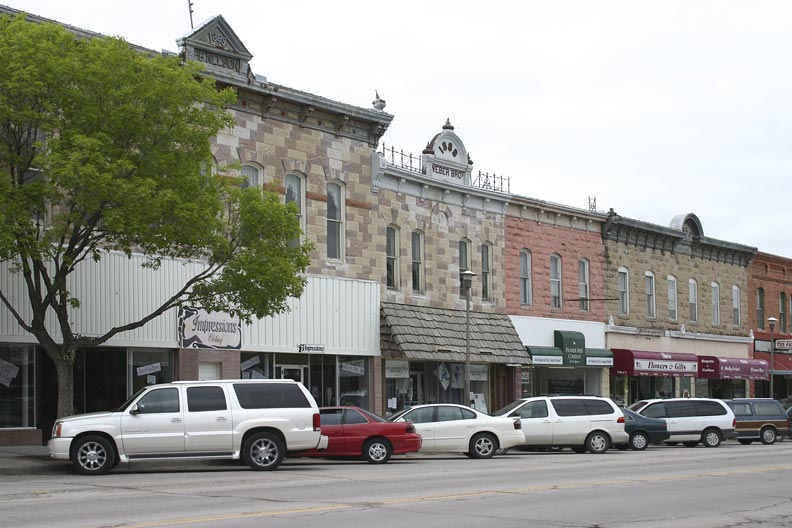
Chadron, NE

As it turns out, I barely had time to finish my pumpkin strudel before the mechanic called to tell me my car was done. We’re talking 20 minutes, tops.

In the end, it was a blown fuse. A big fuse, and one hidden deep inside the engine compartment, but a fuse nonetheless. I gladly paid the $20 labor fee and refused to feel bad about missing that fuse when we checked the others, or about buying that new alternator. Hey, I followed my friends’ advice—which was very sound given what we knew at the time—I grew a lot closer to them and I saved a ton of money by learning to change that alternator myself instead of paying a garage to do it. And there was no way I was going to spend another four hours removing that new alternator or drive all the way back to return it. I already cashed in the old one to be rebuilt and resold, anyway. For what it’s worth, the mechanic told me that fuse was a rare part and I wouldn’t have been able to find it in any auto parts shop in the area. They were only able to replace it because they had another broken down Infiniti with the same part and they pulled it for me.

So, with a big weight off my shoulders and a big smile on my face, I gave my best to Buffalo Bruce and hit the road. It took me over 12 hours to cross Nebraska and most of Iowa, but I finally arrived at my uncle’s house in Cedar Rapids. I decided to cut out the Chicago visit to save time and more than make up the cost of that alternator, and now I’m back on schedule to arrive at my next farm in Mississippi in two days. And while I was on the road, the Mississippi farmer called to ask what kind of beer I liked before he went shopping.

Life is good.

Tuesday, October 5, 2010

The Originals

Today I met Alex, Gerald’s older brother. He came to the house early in the morning with a bobcat to help level some of the ground around the construction area. I wasn’t expecting him, and the appearance of a truck bearing a big bobcat took me by surprise as I stood outside brushing my teeth over a rusty, pipeless sink.

Alex called Gerald and Shannon at the crack of dawn to say he was coming by, but they didn’t have enough time to meet him here when he arrived. With some time to kill, we sat around and chatted about evil white people for an hour or so.

Alex refers to Gerald as his “little brother,” though if I had to guess, I’d say Alex looked about ten years younger. I was shocked when he mentioned that he was in his sixties; he was a big guy, very able bodied and active-looking, and a lot of muscle. His hair was still dark and his face showed only mild wrinkles that I would have placed on someone in his forties. He did point out that Indian people live healthier and longer lives because they use their minds to heal, not a bunch of medications.

Alex had no trouble carrying on the conversation. I think he really got a kick out of telling me stories of his tribe’s rituals and philosophy. He started by talking about how much the area had changed in his lifetime. When he was a kid, there wasn’t a single house around here other than his grandfather’s small home. Alex and Gerald grew up in the hills that surround us, and would eat nothing but cornmeal every day for a week. The next week, they would eat nothing but oatmeal. The week after that, nothing but rice, Then they’d start over with oatmeal again. Looking around the property, he claimed he could see about thirty different invasive grasses and weeds on what was once hills full of nothing but buffalo grass. “They’re taking over our land,” he said, “just like the white man.”

Alex and Gerald grew up speaking the Lakota language. Americans, according to Alex, were really missing out with because English words don’t have any meaning to them. I didn’t quite understand this, so he tried to explain it with the word love. Love, he said, doesn’t mean anything just to say it, but in Lakota the closest word for love implies a whole system of compassion that connects two people.

Alex & Gerlad Weasel... Lakota Brothers

Alex went on to vent about white visitors who claim to be environmentalists. All “environmentalist” means to him is someone who raises awareness but doesn’t do anything himself. He really went on a rant talking about how much it irks him to hear these so-called environmentalists act as if they were so smart. “They think they’re better than the world around them because they have brains,” he said, “but a brain is nothing.” He then went on to say that Lakotas call what’s in your head a seed. Alex then spread his arm across the field and said that everything around us comes from a seed—every plant, every insect, every animal and every person. We’re all just seeds, and therefore all equal. To speak of the world around you as if you were a superior being, he said, was an entirely wrong idea.

Then he went off on Catholics. And man, does Alex hate Catholics. The Pope is the closest thing to Satan on earth as he could imagine. According to Alex, European explorers and settlers were told by the Pope that the tribes living in the New World did not count as human beings since they didn’t acknowledge Jesus Christ. Therefore, it was okay to kill them and take their land. He also went off on how ridiculous it was to pray to only one god since there are countless spirits all around us. He said white people can’t even tell when their ancestors are in the room, then added that we’d be having a very different conversation if there was a contrary spirit present.

A contrary spirit compels one to play devil’s advocate, so to speak. About five years ago, a group of bikers came through the reservation and were completely intrigued with the Lakota culture. They were welcome by the community and invited to a young man’s birthday party. At the party, the tribe summoned a contrary spirit, then passed a microphone around the room so everyone could speak. Alex spoke first, telling the boy that he hated him, wished he was never born and was good for nothing. The next person who took the microphone said similar things, as did the next and the next all the way down the line. Alex noticed the bikers getting angry and worked up at these words (not to mention a bit confused), so he sent someone to explain to them that, under the influence of the contrary spirit, they said the opposite of what they meant. The point of this was to create a balance; in a world where people often say nice things they don’t mean, this is a time when you know people have a good and loving meaning behind phony words. Alex said the bikers broke down in tears when they understood the ritual. One of them said he’d give a million dollars to be adopted by the Lakota tribe.

Incidentally, Alex hates the phrase “Native American.” He says he isn’t American at all since his people were there before that word existed. He prefers to think of himself and his tribe as “originals.”

Only at the end of these stories did Alex point out that when he referred to white people negatively that he didn’t meant for it to apply to me. I told him I didn’t mind and liked hearing his thoughts. Then he asked if I was Catholic.

I was happy to said no.

Sunday, October 3, 2010

Whitey on the Res

The house now is nearing completion, although running water is still in the works. It’s a cute little one-bedroom cottage with a spacious loft area and earthen floors and walls. Our work here includes a variety of projects, like collecting and drying herbs, helping build a cob storage shed and fixing and installing loads of little things in the house. My biggest task is to build a fence around the property to keep horses and cows at bay (their residue is everywhere and shoveling it is on neverending project in itself). Once again, I’ve found myself spending most of my days digging holes. With all the skills I’ve developed, I’m now thinking about starting my own hole-digging business when I’m done WWOOFing.


This permaculture project is very low/no budget, so most of the building supplies are donated and most of the tools are borrowed. Resourcefulness is a necessity, and we often find ourselves scrounging through heaps of construction junk to find a post or sheet of plywood just the right size. The race now is against the season, and we’re rushing to get done with everything that has to be finished before winter comes. The first snowfall can happen anywhere in the next 2-6 weeks, and not much can be done after that.

So far I’m liking it here. Two more volunteers, Chip and Alexis, arrived the day after I did. We stayed in our tents only the first two nights. After that, the temp dropped dramatically so we all moved into the house. Gerald, Shannon’s father-in-law, will eventually move in here, but he prefers to stay with Shannon in the next town until it’s finished.

With no running water, we have to fill up coolers at the neighbor’s garden pump. There’s an outhouse, an outdoor mirror and sink (no pipes) and a camp shower, although dinner is served at Shannon’s house a few miles away so we tend to shower when we go there. Like Utah, ambient light is scarce out here, so on a clear night you can see a zillion stars in the sky. And if you stare long enough, you’re bound to catch a few shooting stars.

I heard plenty of horror stories from my friends about coming here. They ranged from “all reservation Indians hate white people” to “everyone on the res is a kleptomaniac alcoholic and they’ll steal anything you leave unwatched.” I can’t say everyone here is immaculate, and alcoholism is definitely a big res issue, but so far everyone I’ve met has been very friendly. Shannon is Jewish and from California, and she’s been completely welcomed into this culture.

Gerald quickly became one of my favorite people here. He’s a skinny guy in his late sixties, although he can wield a sledge hammer like nobody’s business. He has a strong Lakota accent and tells great stories about growing up with his grandfather in these hills before anyone else settled here. He also has some sad stories, like being slapped on the knuckles with a ruler anytime he spoke the Lakota language in public school. Overall, he’s totally mellow and very happy about his new house. I have to be careful leaving clothes lying around because he’s likely to grab my jacket or hat and walk to the next town with it. It’s not theft, it’s just his way; he lives minimally and is used to sharing everything with his family and neighbors. And he always returns what he takes.

So far, I only had one awkward moment. A few nights ago, I stopped by a local quickie mart—the only store for miles—to pick up some food for Shannon. Two Indian children were sitting outside when I walked up with the two other volunteers, who are both white. Once kid kept saying “Where are all these white people coming from?” while the other just shouted “Hey white people! Give us money!”

Oh well.

Friday, October 1, 2010

Res Life

After all my days of cruisin’, I finally arrived at my destination on the Pine Ridge Indian Reservation!

I arrived a bit later in the day than I expected, partly because I took a scenic detour through the Badlands and partly because I got horribly lost. At any rate, Shannon, the woman in charge of volunteers, directed me to the construction site and told me I could set up my tent anywhere on the property. It was late, dark and cold, though, so I opted to snooze in the car for my first night. My car’s back seat, believe it or not, has given me some of my best nights of sleep on this trip.

I should probably explain this reservation project. Although it’s part of the WWOOF network, it’s not exactly a farm. A house belonging to Shannon’s father-in-law burned down over a year ago and she’s spearheading the project to rebuild it. Not only is it being rebuilt, but Shannon is turning it into a large permaculture project to help the community. This includes straw bale exterior walls, cob interior walls, a composting toilet, a solar heater, a rainwater catchment system and several permaculture gardens that will hopefully produce veggies and medicinal herbs that can be sold for profit.


The Pine Ridge reservation is the poorest Indian reservation in the country, and this construction project is smack dab in the middle of its poorest area (by the way, I’ve learned that “Native American” is not kosher by most Indians). Shannon is using this building project as a way to reach out to the tribal community, teach them to do their own sustainable projects and hopefully generate some revenue for locals who are willing to help out with the garden and get involved with selling its goods. She is currently encouraging people to turn their old refrigerators into worm farms/compost bins—as just about everybody out here seems to have an old refrigerator lying around the yard.

I knew most of this info before I arrived, but the area doesn’t look as impoverished as I expected. It may be low income by national standards, but I quickly realized that it’s a close-knit community where everyone habitually pitches in to help each other out. For example, Gerald, the father who will eventually live in the house, needs to travel 10 miles every day from his daughter’s house to the construction site. He doesn’t have a car, so in the morning he just starts walking until someone passes by and picks him up. His sons do the same thing, and I’ve learned most people in the community get around that way.

There is barely anything out here other than lots of small houses. The region consists of several small towns each about 10-20 miles apart, and it’s rare to find even a gas station in most of them. I’ve been in rural areas with gas stations and stores further apart than this, but never among so many towns with such dense populations. The poverty level probably has something to do with lack of businesses, and therefore jobs, but it seems like nobody here is really interested in money-making schemes. I’ve heard a few comments to verify that many Indians here hate how capitalist white people just want to make a buck.

Well, I chose this place because it seemed like a radically different project than what I’ve been doing and I wanted variety in my farms, as well as a cultural experience. So here I am…